
The smallest farms in Indonesia are getting smaller
In Indonesia, farms under half a hectare are not the exception. They are the majority.
According to Indonesia’s agricultural census data (BPS), 58.7% of the country’s 27.7 million farm households farm less than 0.5 hectares — and the agricultural census of 2023 shows this group is growing, not shrinking. The number of gurem (marginal) farmers rose 18.5% between 2013 and 2023, and the number of households farming less than 0.1 hectare grew by 70% in the same decade.
n the country’s poorest eastern provinces, such as Nusa Tenggara Timur (NTT), these farms sit in some of the driest, most nutritionally stressed districts in Southeast Asia.
What half a hectare cannot do

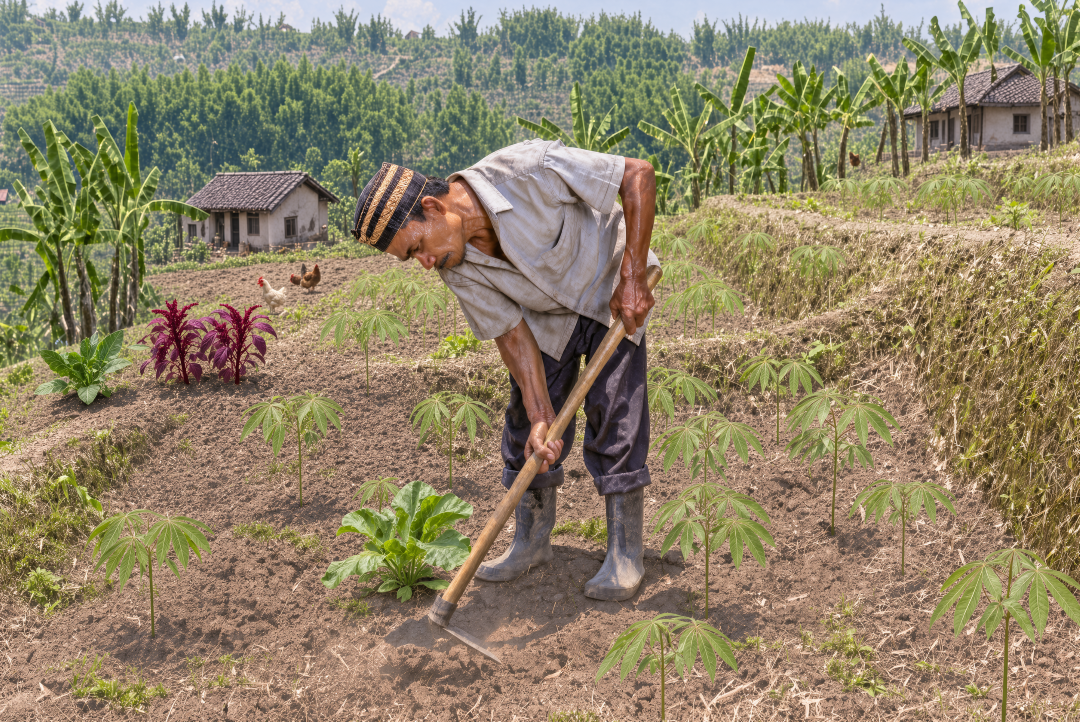
Very small farm sizes cannot produce adequate nutrition for families with small children. A farm of 0.3–0.5 hectares in eastern Indonesia typically produces staples: cassava, maize, rice where water allows. These are energy crops. They are not protein crops.
The result shows up in the nutrition statistics. In NTT:
Stunting affects roughly 1 in 3 children — the SSGI 2023 national survey recorded 37.2%, nearly double the already-serious national rate of 21.5%
40.9% of women of childbearing age are anaemic (2023)
Poverty stands at 20.3%, more than double the national rate
These are not separate problems. A child whose diet is cassava and rice is a child short of protein, iron, and micronutrients — every single day, precisely during the window when the brain and body are being built.
Standard sources are priced out
The usual prescription — more animal protein, more eggs, more fish, fortified foods —while nutritionally sound is often economically out of reach.
Indonesia’s own statistics bureau (BPS) reported that in the year to September 2025, meat prices rose by roughly a fifth, and eggs — the poor family’s traditional protein fallback — rose around 23%. On a marginal farm whose entire cash income may be a few hundred dollars a year, “buy more protein” is not a program. It is a wish.
Supplementation programs work, but they are recurrent costs that create dependency: every supplement packet must be bought, shipped, and distributed again next month, and the month after that.There is another protein — and it has a centuries-long safety record

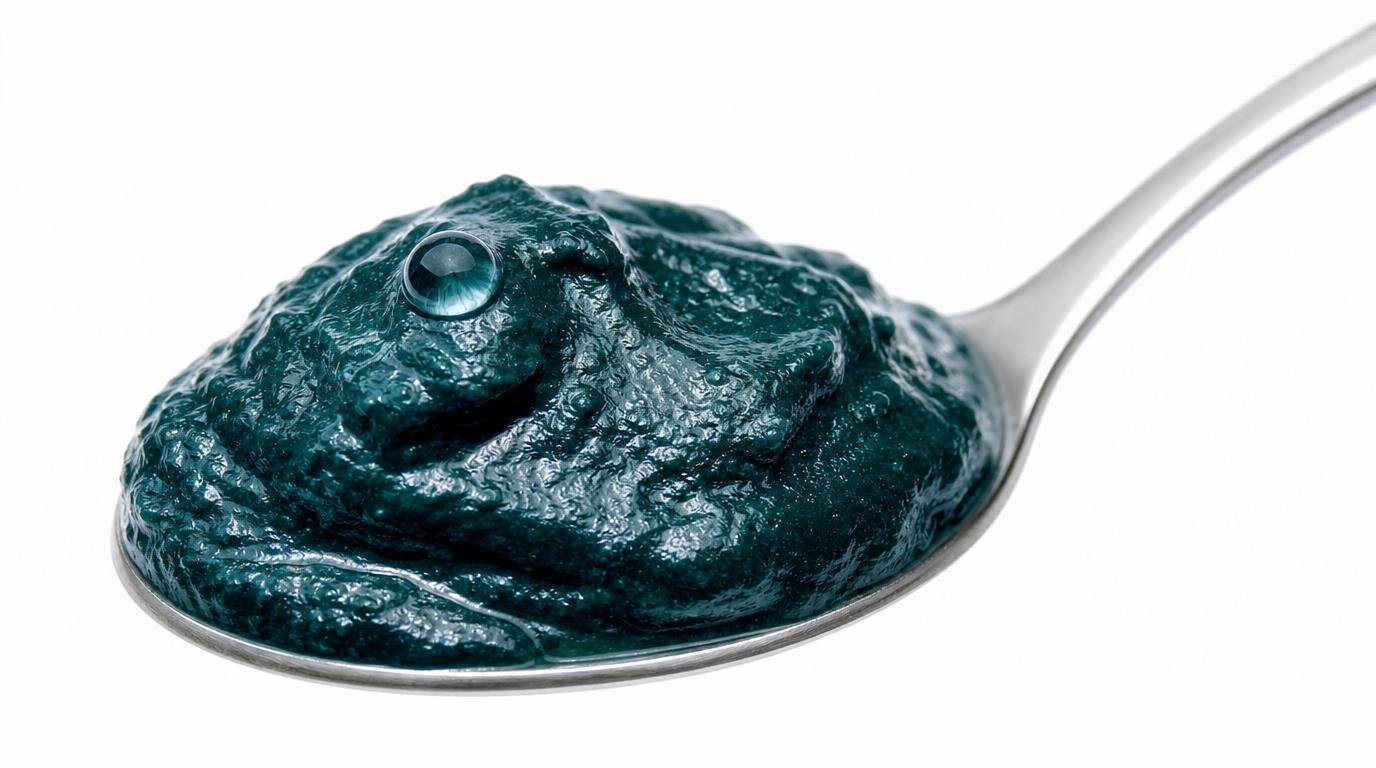
Spirulina is a blue-green microalgae, 50–70% complete protein by dry weight. The USDA food composition database records roughly 60 grams of protein and 28.5 mg of iron per 100 grams of dried spirulina — protein density no staple crop comes close to, in a food whose amino acid profile is complete.
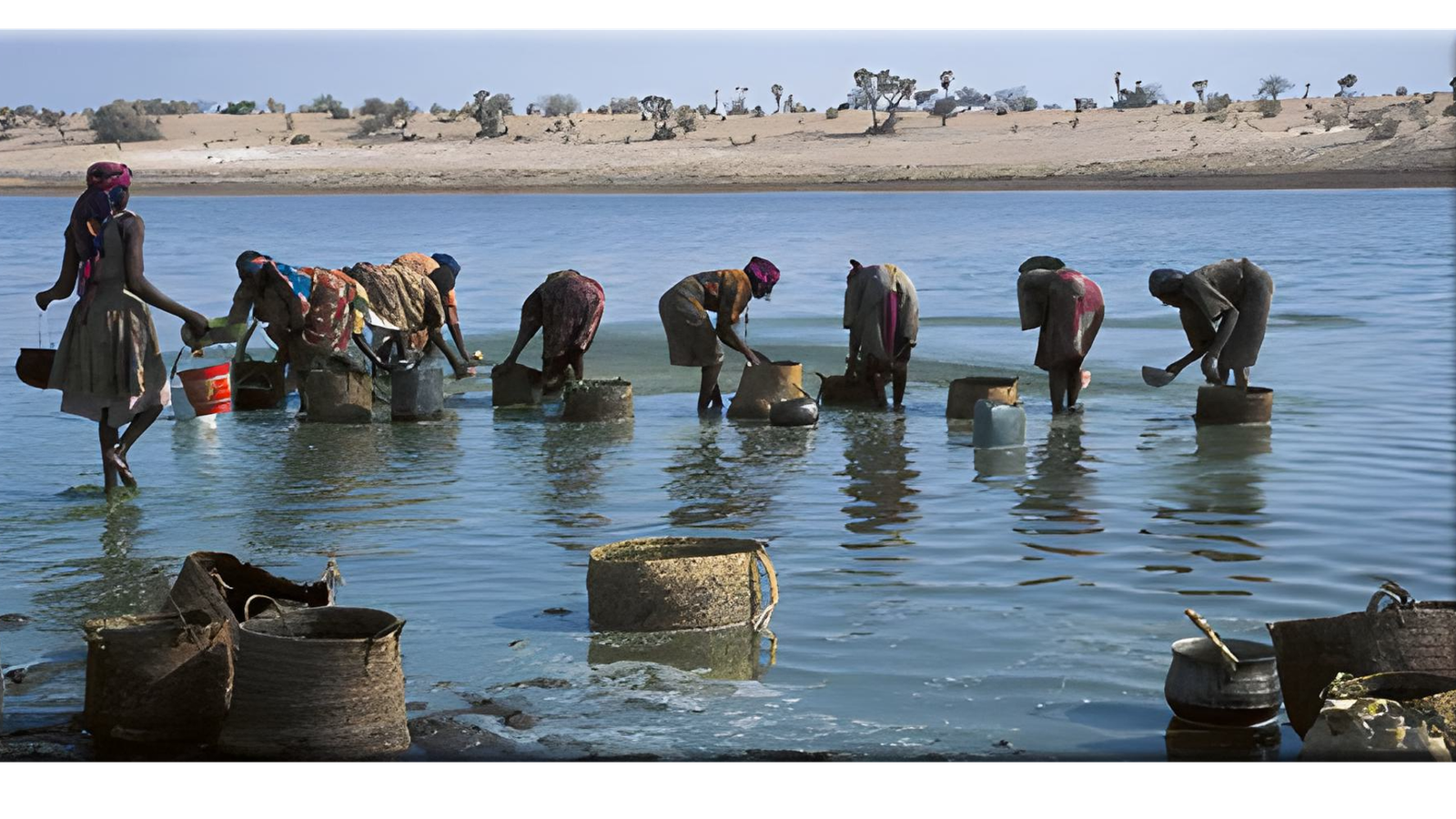
Its use as human food is not an experiment. For centuries, the Kanembu people around Lake Chad in central Africa have harvested wild spirulina, dried it into cakes called dihe, and sold it in local markets — one of the oldest documented functional foods on earth. Modern commercial cultivation has operated at industrial scale for decades.
Ten grams of dried spirulina — about two teaspoons — provides roughly the protein of one egg, plus meaningful iron.
Spirulina is one of the worlds most nutrient dense foods
Protein is only the headline. Spirulina delivers B vitamins at multiples of daily need, folate for every pregnancy in the district, more iron per gram than any staple crop on earth, copper that unlocks that iron, and beta-carotene and phycocyanin — the antioxidant portfolio a cassava-based diet cannot supply.
Two teaspoons a day is not a protein supplement. It is a micronutrient intervention the farm can grow itself — which is precisely what makes it different from everything else in the nutrition toolkit.

Vitamins of note
(per 100gm of dried spriulina)
- B1 (thiamine) 2.4 mg - ~2× daily need; critical where the diet is polished-rice dominated (beriberi territory)
- B2 (riboflavin) 3.7 mg - nearly 3× daily need; one of the highest B2 densities of any food
- B3 (niacin) 12.8 mg
- Folate ~94 µg - folate deficiency in pregnancy drives neural tube defect
- Beta-carotene (pro-vitamin A) - supports vision and immune function, the classic gap in cassava-maize diets
- Vitamin K - ~25 µg
Minerals
(per 100g of dried spriulina)
- Iron - (28.5 mg) One of the highest iron densities of any food — beef sits around 2.6 mg per 100 g, for comparison.
- Potassium (~1,360 mg ) and magnesium (~195 mg) govern muscle function, hydration, and blood pressure — the electrolytes a farm labouring household sweats out daily.
- Zinc (~2 mg) is the immune and growth mineral whose deficiency quietly stunts children even when calories are adequate — the same mechanism behind the stunting statistics cited above.
- Calcium (~120 mg) supports the bones being built in precisely the childhood window this project targets.
- manganese (~1.9 mg), rarely discussed, is a cofactor in bone formation and antioxidant defence. No single one of these is a miracle. Together they are the difference between a diet that fills and a diet that build
Phytonutrients — the distinctive ones
- Phycocyanin — the blue pigment, 10–15% of dry weight; spirulina's signature compound, extensively studied for antioxidant and anti-inflammatory activity. This is the one that makes spirulina spirulina.
- Zeaxanthin — a carotenoid tied to eye health
- Gamma-linolenic acid (GLA) ~1 g (per 100g)- an unusual omega-6 found in very few foods
The Selvanex bioreactor: spirulina built for a small farm, not a factory

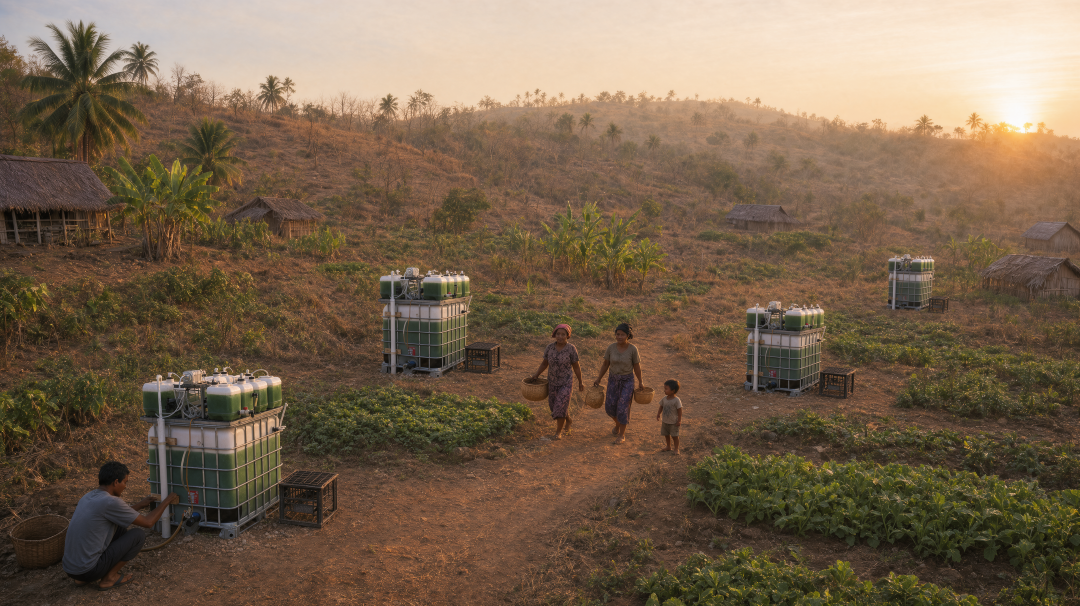
Commercial spirulina is grown in open raceway ponds of thousands of square meters, and can cost millions of dollars to construct and operate. That model will never reach a 0.3-hectare farm in Timor.
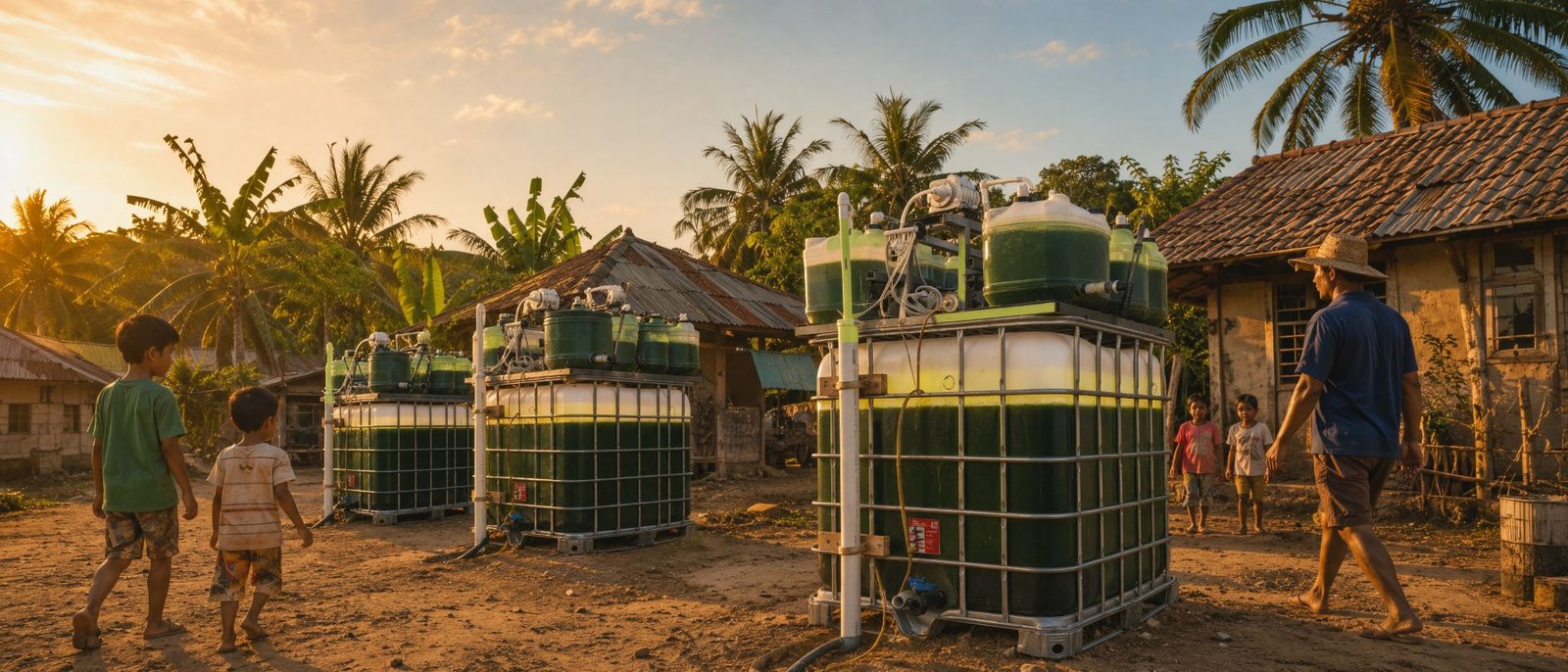
The Selvanex bioreactor was designed for exactly that farm. Each unit is compact, runs on a simple nutrient regime, and can produce up to 30 kg of dried spirulina per year — with harvest and drying integrated into the tech stack so the output is a storable, saleable powder, not a perishable soup.
Two units per farm occupy a few square metres — against a farm of 3,000–5,000 square metres, a fraction of one percent of the land — and require a few hours of attention per week.
The design was refined through multiple engineering iterations that have resolved the core issues, including harvesting and drying challenges that have historically made small-scale spirulina uneconomic.
The farm account: with and without spirulina
Take a representative marginal farm in NTT: 0.3–0.5 hectares, a household of five, staples-dominated diet, cash income at or below the poverty line.
Without the bioreactors: the household eats what the land provides — energy-rich, protein-poor. Protein comes in small amounts, at prices that just rose by a fifth. Iron for the women comes from nowhere in particular. The children’s diet is structurally deficient, and every year of it compounds.
With two bioreactors, producing 60 kg of dried spirulina per year, three things change at once:

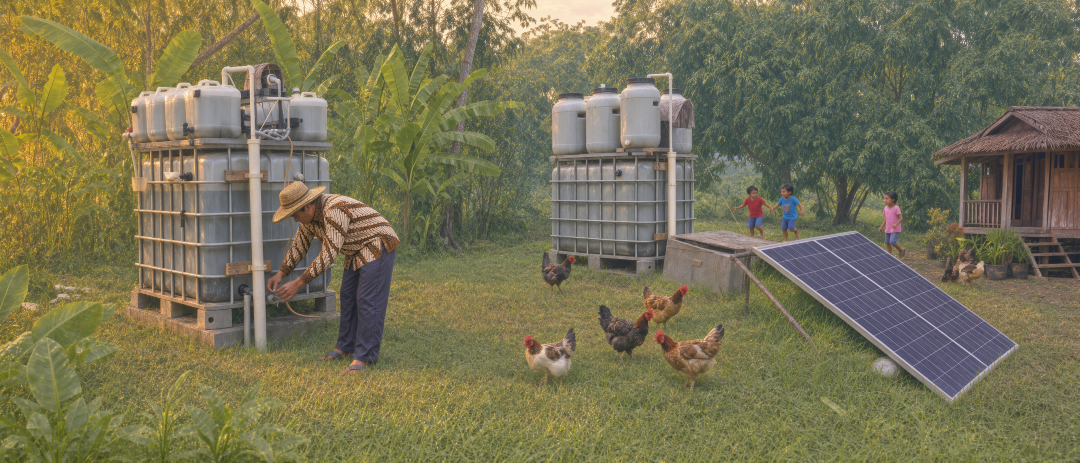
1. Nutrition. Sixty kilograms is about 36 kg of complete protein a year — on the order of a hundred grams a day available to the household, before any other food. Realistically consumed at two to five teaspoons a day across the family, that is the protein of two to four eggs daily, plus spirulina’s unusually dense iron and nutritional factors — the exact nutrient 40.9% of NTT’s women are missing. It does not replace a diverse diet. It closes the specific, measurable gaps that a cassava-and-rice diet cannot.
2. Income. Spirulina is a traded commodity with established wholesale markets. Global bulk prices run from around US$6.50/kg at commodity scale to €34/kg for certified organic produce; established producers sell branded product at US$70–190/kg. Even at a deliberately conservative farm-gate price of US$10–15/kg, a household selling half its output earns US$300–450 in cash per year — on a base of a few hundred dollars, a 30–50% increase in household cash income, from two units in the yard.
3. Resilience. Dried spirulina stores for months without refrigeration. It is not lost to a bad week, a bad market, or a truck that doesn’t come. The household’s single most fragile nutrient supply becomes its most stable one.
Outstanding return on development investment
Nutrition economics has some of the best returns in development. Copenhagen Consensus analyses consistently rank micronutrient and nutrition interventions among the highest-return spending in global development — on the order of eleven dollars of societal benefit per dollar invested. Indonesia’s own government has quantified the stakes: a 2025 Ministry of Finance–Bappenas study estimated stunting costs the country around 5% of GDP — roughly US$10–11 billion per year.

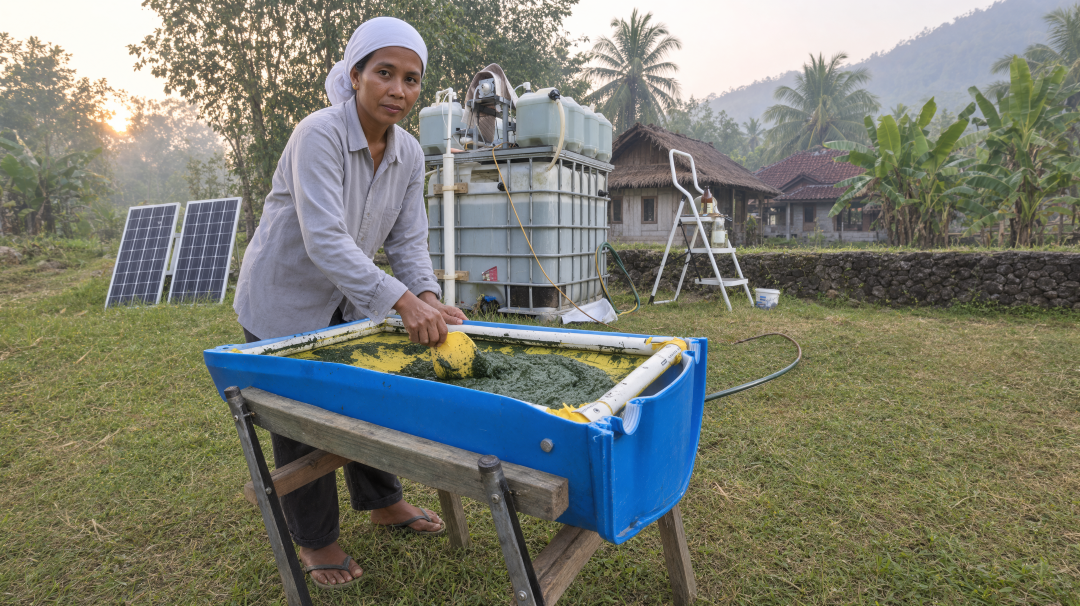
Against that, two bioreactor units, installation, and a season of training cost roughly what a six months of supplementary food-aid for one family would cost — and unlike the aid, the bioreactors keep producing year after year. What is more, the asset does not depreciate into dependence. It produces every year, for the cost of nutrients — an established industry norm of 15–25% of production cost — and a few hours a week.
An intervention that scales beyond the farm gate .
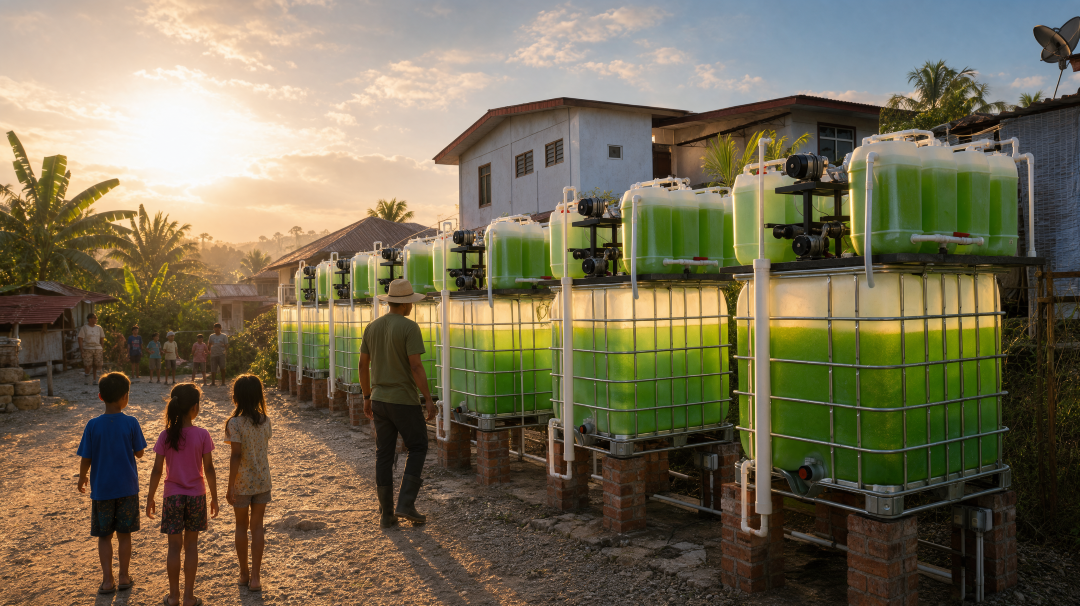
At village scale, aggregation changes the picture again. A cooperative of twenty farms produces 1,200 kg of food-grade dried spirulina a year — enough to supply local schools and clinics, and to approach regional buyers for health-food and fortified-food markets, where prices are far above farm-gate.
Spirulina farming could potentially be performed by women: spirulina cultivation is light, close to home, schedulable around household tasks, and the processing and selling roles in spirulina value chains worldwide are predominantly female. A project design that routes units through women’s groups targets the household’s nutrition decision-maker directly.
The caveats
The case for deploying Selvanex bioreactors is strong. However, we will not pretend they run on autopilot without input from the farmer. There are issues that require research:
Water and hygiene matter. Spirulina grows in alkaline water that is hostile to most contaminants, but safe food still requires clean handling, correct drying, and basic quality monitoring. Training and simple QA are non-negotiable parts of an implementation project, not add-ons.
Rated yields need field confirmation. The 30 kg/year figure is an estimate based on trials in Australia; pilot-scale measurement under regional conditions requires a pilot project.
The income path needs aggregation. One farm selling 30 kg is a rounding error; a village cooperative of twenty is a business. A development project must build the aggregation layer from day one.
Spirulina is a supplement, not a staple. It closes protein and micronutrient gaps. It does not replace dietary diversity, and no honest program should pretend otherwise.
Every one of these caveats is a project design requirement, not a disqualifier. A pilot of 50–100 farms across two or three districts, with baseline and endline anthropometric measurement, would answer them all — with data a national program could scale on.
Sources: BPS Agricultural Census 2013/2018 and Agricultural Census 2023 brief; SSGI (Indonesian National Nutrition Status Survey) 2019 and 2023; FAO country factsheet on small family farms, Indonesia (2018); BPS consumer price data, September 2025; USDA FoodData Central (spirulina, dried); Ministry of Finance–Bappenas study on the cost of stunting (2025, as reported); Copenhagen Consensus nutrition benefit-cost analyses.